Why the Wider Campus Environment Matters
As colleges and universities came back to life this September, thousands of students returned to campuses across the country. While attention naturally focuses on teaching, courses and the opportunities a new academic year brings, the environment in which students spend their time matters too.
Earlier this year, the Government announced £307 million to repair and improve facilities across all 175 further education colleges in England during the 2026/27 academic year. Part of a wider £1.7 billion investment to modernise college buildings by 2030, the funding is intended to address everything from leaking roofs and outdated heating systems to worn-out facilities, with colleges able to prioritise investment according to their own needs.
This pledge reflects a broader recognition that the quality of an educational environment can influence the experience of those who use it. But that environment extends far beyond the classroom.
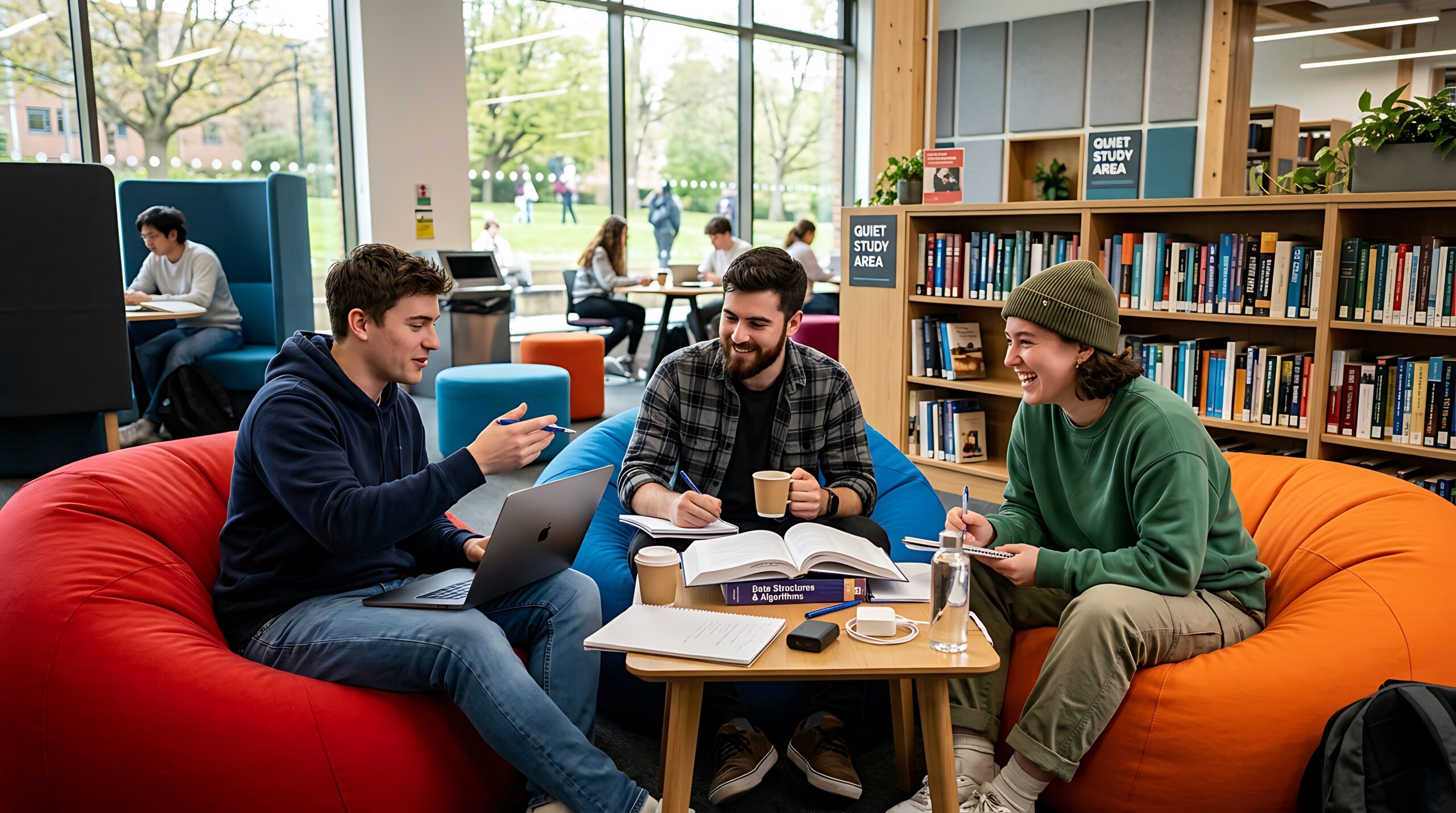
For university and college students in particular, campuses are places to live, study, eat, socialise and increasingly access wellbeing and support services. Accommodation, communal areas, hospitality facilities and informal meeting spaces all form part of that wider experience.
As the way students use campuses changes, those spaces need to be able to respond.
Our work at Royal Holloway University provides an interesting example. The refurbishment of its Medicine Bar transformed what had been a tired campus nightclub into a more flexible, multi-use space. While retaining its original function, the refurbished venue can also accommodate functions and wellbeing activities such as yoga. Changes included new heating and toilet facilities and alterations to the bar so that the space could also be used for non-licensed events.
Student accommodation presents very different challenges. At Highfield Court, also at Royal Holloway, we refurbished three student accommodation blocks during the summer closure. Bedrooms, shared areas and kitchens were redecorated, kitchens replaced and associated electrical and plumbing work completed within a tight seven-week programme, ready for students to return.
The two projects are very different, but together they demonstrate the breadth of spaces that contribute to campus life and the practical considerations involved in keeping them fit for purpose.
There is also a wider question about how existing educational buildings can continue to evolve. With students now returning to campuses, attention inevitably turns to how these environments meet their needs today – and how they may need to adapt in the years ahead.
Refurbishment can help colleges and universities make better use of the spaces they already have, responding to changing expectations while improving areas such as accessibility, energy efficiency, flexibility and long-term durability.
As a new academic year gets underway, the focus will rightly be on the opportunities ahead for students. But the environments in which they live, learn and spend their time play an important supporting role.
A campus is more than its classrooms and lecture theatres. From accommodation and social areas to wellbeing and communal spaces, every part contributes to the student experience – and ensuring those spaces continue to evolve alongside the people who use them is an important part of creating educational environments fit for the future.